

Abstract
Follow-up in paediatric coeliac disease is largely based on the assessment of gluten-free diet adherence, serological markers, and growth parameters. Although these measures are necessary for evaluating the biological outcomes of treatment, they do not always capture the child’s experience of living with the disease or the effects of the diet on daily life. Based on the current literature, anxiety, depressive symptoms, social restriction, and impaired quality of life are seen more frequently in children with coeliac disease than in their healthy peers. The child’s psychosocial well-being may be influenced by the nutritional quality and cost of gluten-free products, by their accessibility, and by the way the family manages the disease. School entry, adolescence, and the transition to adult health care warrant particularly close monitoring. At routine visits, assessment may extend beyond serological results to include gluten-related anxiety, avoidance of safe foods, and social participation. For this narrative review, PubMed, Scopus, and Web of Science were searched for studies published between January 1, 2018, and September 7, 2026; older foundational studies were included when relevant. The largely cross-sectional and tertiary-centre-based nature of the literature, the use of different measurement instruments, and the scarcity of longitudinal data complicate causal interpretation. Future studies should develop or use validated, coeliac-specific tools that distinguish healthy dietary adherence from hypervigilance and should follow children longitudinally from diagnosis.
Keywords: Celiac disease, child, adolescent, anxiety, diet, gluten-free, quality of life
Introduction
The diagnosis and follow-up of childhood coeliac disease have long been performed according to a defined set of clinical steps. After diagnosis, a gluten-free diet is initiated; during follow-up, serological markers and growth parameters are evaluated. A gluten-free diet can promote mucosal healing, support catch-up growth, and reduce the risk of long-term complications (). Confining coeliac follow-up to biological indicators is insufficient to understand how the child perceives the disease and how they integrate gluten-free living into their daily life. Diet-related anxiety, avoidance behaviours, and social restriction may therefore fall outside the scope of clinical assessment (, , ).
This gap becomes more apparent in the differing experiences of children with similar serological and growth outcomes (, , ). In immunoglobulin (Ig) A-sufficient children, serological follow-up should primarily be based on IgA anti-tissue transglutaminase antibodies (tTG-IgA), preferably measured using the same assay used at diagnosis. IgG-based tests are mainly reserved for patients with IgA deficiency or selected clinical circumstances (). A decline in disease-specific antibody levels, together with appropriate growth and nutritional status, is an important component of follow-up; however, satisfactory biological outcomes do not exclude food-related anxiety or social restriction (, , ). Accordingly, outpatient follow-up may also explore whether the child avoids safe foods, withdraws from social activities, or experiences anxiety about possible gluten exposure (, ).
Although the ESPGHAN position paper recommends regular assessment of quality of life, the extent to which formal quality-of-life assessment is incorporated into routine paediatric follow-up remains unclear (). Possible barriers include time constraints during outpatient visits and the absence of a standardised approach to the timing and selection of assessment tools.
This review addresses the psychosocial difficulties experienced by children diagnosed with coeliac disease and the limitations of the studies in this field. The behaviour of a child who is careful about their diet may not always indicate healthy adaptation. Children who are intensely anxious about inadvertently consuming gluten may read food labels over and over, avoid eating out, or frequently ask those around them to be sure that what they are eating is safe (, ).
In paediatric patients who adhere meticulously to the diet, it is of critical clinical importance to determine whether this adherence reflects secure self-management skills or fear of accidental gluten ingestion. Because satisfactory serological and growth outcomes may be observed in both situations, these measures alone cannot distinguish confident self-management from anxiety-driven adherence. Accordingly, this review examines the clinical and epidemiological background of paediatric coeliac disease, the psychosocial burden of the gluten-free diet, the distinction between healthy adherence and hypervigilance, and the influence of developmental and family factors.
Previous reviews have summarised psychosocial well-being and quality-of-life outcomes in paediatric coeliac disease (, ). This review extends that literature by translating these findings into a developmentally informed, family-centred framework for clinical follow-up, with particular attention to distinguishing confident dietary self-management from anxiety-driven hypervigilance.
Review Methodology
This narrative review examines the psychosocial effects of paediatric coeliac disease and the biopsychosocial factors relevant to clinical follow-up. Searches were performed in PubMed, Scopus, and Web of Science for publications dated from January 1, 2018, to September 7, 2026, with the final search conducted on September 7, 2026. The search strategy was structured around three core concepts: coeliac disease, the paediatric population, and psychosocial or dietary management outcomes. Database-specific search strings are provided in .
Search terms included “celiac disease” or “coeliac disease,” together with terms referring to children and adolescents (paediatric populations), and to outcomes such as “quality of life,” “anxiety,” “depression,” “psychosocial,” “gluten-free diet,” “dietary adherence,” “hypervigilance,” “avoidance,” “self-management,” “eating behavior,” and “family.” The terms were combined with the Boolean operators AND and OR as appropriate. No language restriction was applied during the search, although all publications discussed in the final synthesis were available in English.
Eligible publications addressed children or adolescents with coeliac disease and examined at least one domain relevant to biopsychosocial follow-up, including psychological symptoms, quality of life, gluten-free diet adherence or self-management, hypervigilance or food avoidance, eating behaviour, social participation, family or caregiver burden, or developmental transition periods. Cohort, case-control, cross-sectional, qualitative, and relevant intervention studies were considered, together with systematic reviews, meta-analyses, and clinical guidance directly relevant to paediatric coeliac follow-up. Adult or mixed-age studies were considered only when they addressed a clinically relevant question for which paediatric evidence was limited.
Publications were excluded when they did not specifically address coeliac disease, did not report outcomes within the scope of the review, or focused exclusively on laboratory, histological, genetic, or other biomedical outcomes that were not relevant to biopsychosocial follow-up. Adult-only studies without specific relevance to the paediatric scope were also excluded, as were studies involving interventions, exposures, or clinical contexts outside the review question. Publications providing insufficient information for assessment were excluded. Letters, protocols, editorials, conference abstracts without adequate full-text information, duplicate publications, and overlapping reports from the same cohort were likewise excluded when appropriate.
Both authors independently screened titles and abstracts and assessed potentially eligible full texts. Disagreements regarding eligibility were resolved through discussion and consensus. The searches yielded 3,601 records: 935 from PubMed, 1,415 from Scopus, and 1,251 from Web of Science. After 1,878 duplicate records were removed, 1,723 unique records remained for title and abstract screening. Of these, 215 underwent full-text assessment. A total of 156 articles were excluded at this stage. The main reasons were an adult-only population without specific relevance to the paediatric scope (n = 42), outcomes outside the scope of the review (n = 31), exclusively biomedical outcomes without relevance to biopsychosocial follow-up (n = 24), an ineligible publication type (n = 24), insufficient information or unavailable full text (n = 16), an intervention, exposure, or clinical context outside the review scope (n = 11), and duplicate or overlapping reports identified during full-text review (n = 8). Fifty-nine publications met the full-text eligibility criteria.
As this was a narrative review, the final discussion prioritised non-redundant publications that directly informed the review’s core clinical domains: psychological symptoms and quality of life, dietary self-management and hypervigilance, family or caregiver burden, and developmental transitions. Selected pre-2018 publications were also retained when they provided important historical or conceptual background; these were identified through reference-list screening.
Studies involving children and adolescents served as the primary basis for the synthesis. Adult or mixed-age evidence was used only when paediatric data were limited, and was treated as supportive rather than directly applicable to children. Such studies are identified explicitly in the narrative synthesis.
No pre-registered protocol or formal, structured risk-of-bias assessment was used, in keeping with the narrative design of the review. Study design, sample size, age group, number of centres, reliability of the measurement instruments, and extent to which individual studies could support causal interpretation were considered during the synthesis.
Epidemiological and Clinical Framework
Coeliac disease is an immune-mediated systemic disorder triggered by gluten in genetically susceptible individuals and characterised by variable degrees of small-intestinal mucosal injury. Because involvement is not confined to the intestine, it is defined as a systemic disease (). The global prevalence is estimated to be approximately 1.4% based on serological testing and 0.7% based on biopsy-confirmed cases (). In Türkiye, a nationwide school-based screening study conducted across 62 provinces, 139 schools, and 20,190 students reported a biopsy-confirmed prevalence of at least 0.47% (). This corresponds to approximately one in 200 school-aged children and highlights that coeliac disease is relevant not only to paediatric gastroenterology but also to general paediatric follow-up.
In children, coeliac disease can present with a wide range of clinical manifestations. In addition to classic gastrointestinal symptoms such as diarrhoea and abdominal pain, patients may experience growth faltering, treatment-resistant iron-deficiency anaemia, fatigue, neurological manifestations, and psychological symptoms. Some children, particularly those identified through screening, may be asymptomatic at the time of diagnosis ().
The presence of symptoms before diagnosis may influence how children perceive the need for a gluten-free diet. Children who experience a clear improvement in symptoms after starting the diet may find it easier to understand its benefits and the rationale for continued adherence. In contrast, children identified through screening may notice fewer immediate changes in their daily lives, which may make ongoing education, reinforcement, and follow-up particularly important. Nevertheless, high adherence has also been reported among adolescents with screening-detected coeliac disease, although regular specialist follow-up may be less consistent in this group (, ).
Psychosocial Burden: Evidence and Possible Mechanisms
The association between coeliac disease and psychiatric symptoms has been examined in both meta-analyses and large registry-based studies. A meta-analysis that included adult and paediatric populations reported an odds ratio of 2.26 [95% confidence interval (CI), 1.10–4.67] for anxiety and 3.36 (95% CI 1.36–8.32) for depressive symptoms (). As these estimates were derived from mixed-age samples, they are better interpreted as supportive evidence rather than exclusively paediatric evidence. Paediatric findings are also available from large population-based datasets. A Swedish national registry study reported an increased risk of psychiatric disorders in children with coeliac disease (). Findings from Türkiye point in a similar direction: adolescents with coeliac disease had higher levels of body image dissatisfaction, depression, and anxiety than healthy peers (). An adult Turkish case-control study also reported poorer quality of life and higher depression scores, with lower educational attainment associated with greater depressive symptoms ().
Quality-of-life differences appear to be most pronounced in the emotional, social, and school domains, whereas differences in physical functioning tend to be less marked (, ). This pattern suggests that psychosocial difficulties often remain prominent even when physical functioning is relatively preserved. In the Indian cohort reported by Chellan et al. (), 40.9% of children reported feeling different from their peers, and 13.6% reported not being invited out for meals because of their diet.
Psychosocial symptoms cannot be explained solely by the social consequences of the diet; nutritional deficiencies and neurological processes may also contribute. In a cohort reported from Morocco, a micronutrient deficiency was detected in 86.6% of those assessed (). Switching to a gluten-free diet does not always resolve nutritional problems. A comparative study found that many commercially available gluten-free products contained less protein and dietary fibre and higher amounts of total and trans fat than their gluten-containing counterparts (). Martín-Masot et al. () reported that ultra-processed foods provided 47.3% of total energy intake.
Neurological manifestations are well recognised in coeliac disease (). Among the proposed mechanisms are antibody cross-reactivity, immune-complex deposition, direct neurotoxicity, and nutritional deficiencies (). Microbiome studies have explored possible gut–brain interactions in coeliac disease; however, substantial methodological heterogeneity remains, and the available paediatric evidence is exploratory and does not establish causality ().
Much of the day-to-day burden arises from the social and behavioural demands of the gluten-free diet. For the child, the gluten-free diet is not merely a nutritional regimen. The child must often plan what they can eat at a birthday party, in the school canteen, or at camp. The fact that gluten-free products are expensive or difficult to access makes maintaining the diet harder, particularly for families with limited economic resources (). In a Jordanian paediatric cohort, financial resources were among the quality-of-life domains in which lower scores were observed ().
Dietary Self-Management and Hypervigilance
In coeliac disease, hypervigilance denotes a form of dietary management in which concerns about accidental gluten exposure become disproportionate to the actual risk. This may be reflected in repeated label-checking, frequent reassurance-seeking, avoidance of foods known to be safe, or withdrawal from situations in which food is shared. Such behaviours may superficially resemble careful adherence, but the underlying motivation is different. Appropriate self-management is characterised by accurate knowledge of which foods contain gluten and which are safe, precautions proportionate to the setting, and the ability to participate in everyday eating situations without excessive fear. Concern arises when anxiety and uncertainty begin to drive dietary decisions beyond what is required for safe gluten avoidance (, ).
Children with a chronic disease are encouraged to take responsibility for their own care to the extent that their age allows. In coeliac disease, however, this responsibility may not always yield positive results. As the child begins to manage the diet on their own, they may refuse certain foods known to be safe or avoid eating out more than necessary (, ). Deciding what is safe at a school canteen, on a school trip, or at a friend’s house and rechecking each time can be mentally exhausting for the child (, ). Meyer () detailed the planning and decision-making burden that sustaining the diet imposes on 8–18-year-olds in daily life. The challenge extends beyond knowing which foods contain gluten; children may also struggle to identify foods that they can consume safely. Pohoreski et al. () found that adolescents were generally able to avoid gluten-containing foods but experienced difficulty identifying safe alternatives. Uncertainty about safe foods may contribute to unnecessary dietary restriction.
Greater dietary knowledge and tighter control do not necessarily translate into better psychological outcomes. In a study of adolescents and adults, hypervigilance toward the gluten-free diet was associated with greater dietary knowledge but poorer quality of life (). As this evidence comes from a mixed-age sample, it should be regarded as supportive rather than as exclusively paediatric. In adolescents, a mixed-methods study identified both flexible and rigid patterns of dietary adherence (). Flexible coping was characterised by confidence and adaptability, whereas more rigid approaches were marked by worry and inflexibility. Adolescents using these maladaptive strategies reported more headaches and fatigue, greater loneliness, and lower quality of life ().
A qualitative study involving younger children described a heightened need for control and an increased perception of threat in the management of a gluten-free diet. The findings also suggest that incomplete or anxiety-provoking education may contribute to heightened vigilance (). Accordingly, educational content provided at diagnosis represents a potentially modifiable component of clinical care.
In coeliac disease, dietary behaviours that appear similar on the surface are not underpinned by the same emotions and thoughts in every child. Evaluating these behaviours solely as adaptive or maladaptive is insufficient. In some children, anxiety about gluten exposure may be associated with increasingly rigid dietary behaviours ().
When serological results and dietary adherence are evaluated on their own, children who gradually develop stricter rules because of anxiety may go unnoticed (, , ). Health anxiety may also vary with age and be shaped by parental attitudes, which may help explain the development of these behaviours during childhood ().
This process can also be observed in eating behaviours. The restrictive nature of the gluten-free diet may contribute to disordered eating behaviours in some children (). Conversely, a co-occurring eating disorder may mask coeliac-related symptoms and contribute to delayed diagnosis (). A study conducted in Türkiye reported orthorexic tendencies in adolescents diagnosed with coeliac disease (). Supporting evidence from adults with coeliac disease also indicates that food avoidance extending beyond gluten is associated with lower quality of life and less favourable eating attitudes and behaviours (); however, these findings should not be directly generalised to paediatric patients.
Hypervigilance may manifest clinically through behaviours such as consuming only meals prepared by trusted individuals, repeatedly seeking reassurance about possible gluten exposure, experiencing marked anxiety after a minor dietary error, or continuously monitoring bodily symptoms after eating (). Although these behaviours are not diagnostic on their own, they may indicate that dietary management is being driven partly by anxiety rather than knowledge and may prompt further assessment of avoidance, social participation, and gluten-related fear (, , ).
Table 1. Distinguishing confident dietary self-management from anxiety-driven hypervigilance in children and adolescents with coeliac disease
Domain | Confident self-management | Anxiety-driven hypervigilance | Clinical prompt |
|---|---|---|---|
Dietary knowledge | Knows which foods contain gluten and which are safe to eat | Knowledge equal or higher, yet uncertainty about safe foods persists (,) | “Which foods do you feel sure are safe for you?” |
Decision-making | Rules applied flexibly across settings; decisions become routine | Each decision is re-checked; planning is mentally exhausting (,) | “How much thinking does a school trip or a meal out take?” |
Eating outside the home | Eats at school, at friends’ homes and at events with advance planning | Only food prepared by trusted individuals; avoids eating out more than necessary (,,) | “Have you eaten out in the past month? Have you declined an invitation because of the diet?” |
Response to a minor dietary error | Corrects the error and moves on | Marked anxiety, repeated reassurance seeking, continued monitoring of bodily symptoms (,) | “What happens, and how do you feel, if you think you have eaten gluten by mistake?” |
Range of foods | Restriction limited to gluten | Avoidance extends beyond gluten; orthorexic tendencies may emerge (,,) | “Are there foods you avoid even though you know they are gluten-free?” |
Social participation | Peer activities maintained; difference acknowledged without withdrawal | Withdrawal from social activities; feeling different from peers (,) | “Do you feel different from your friends because of the diet?” |
Emotional tone | Diet described as manageable | Worry, rigidity and loneliness; more headaches and fatigue reported () | “How often do you worry about accidentally eating gluten?” |
Serological and growth outcomes may be equally satisfactory in both columns and therefore cannot distinguish between them (5,7,8). The prompts listed are clinical prompts derived from the reviewed literature; they do not constitute a validated screening instrument.
Developmental Periods and Family Context
Psychosocial effects vary according to the child’s developmental period (). In younger school-age children, dietary management is often shared with parents, and the rationale for dietary restrictions may not yet be fully understood (). In middle childhood, responsibility for the diet gradually passes from parent to child. During this period, the child compares themselves with their peers, becomes more aware of their differences, and takes on a more active role in the care process. Middle childhood may be a useful period for preventive education, although this requires prospective evaluation. Dietary adherence may become more challenging during adolescence, as increasing autonomy, identity development, and the growing importance of peer relationships can complicate gluten-free diet management (). A qualitative study conducted in Türkiye examined the experiences of adolescents with coeliac disease in their social, emotional, educational, and occupational dimensions; it identified discrimination, difficulty in accessing products, and a lack of social awareness as the principal barriers to self-care (). The transition to adult health care is likewise a period in which adherence can falter. A study reported from Finland showed that those with coexisting type 1 diabetes, those with persistent symptoms, and those experiencing economic difficulty required particular attention during this transition (). Support should therefore be planned not only according to the child’s age but also with regard to periods such as starting school, adolescence, and the transition to adult care.
Table 2. A developmentally informed framework for psychosocial follow-up in paediatric coeliac disease
Period | What changes for the child | What to assess |
|---|---|---|
First year after diagnosis | The diet is established; the content of the education provided at diagnosis may shape later vigilance () | An initial psychosocial assessment alongside the ESPGHAN follow-up schedule (first visit 3–6 months after diagnosis, then approximately 6-monthly until coeliac-specific antibodies normalise) (1); whether education addressed the foods that can be eaten safely as well as those to be avoided (8) |
School entry | Meals move outside parental control; the rationale for dietary restriction may not yet be fully understood () | School canteen, birthday party and school trip situations; whether the child can identify safe alternatives rather than only foods to avoid (27,28) |
Middle childhood | Responsibility for the diet passes gradually from parent to child; comparison with peers begins | Avoidance extending beyond gluten (31,32,33); whether the child feels different from peers (19); a possible period for preventive education, although this requires prospective evaluation |
Adolescence | Increasing autonomy, identity development and the growing importance of peer relationships complicate management of the diet () | Consider conducting part of the interview privately; dietary adherence, gluten-related anxiety and social participation; discrimination, difficulty accessing products and lack of social awareness (34) |
Transition to adult health care | Adherence and regular specialist follow-up may falter () | Particular attention where type 1 diabetes coexists, symptoms persist or economic difficulty is present (35); the overall nutritional quality of the diet, not only the removal of gluten (21,22) |
Earlier clinical reassessment is warranted at any age when a child experiences marked anxiety, withdraws from social activities or refuses foods known to be safe, even when serological and growth outcomes are satisfactory (5,7,8). Referral to child and adolescent mental health services should be considered for cases of marked anxiety, social withdrawal, or disordered eating behaviours.
Coeliac disease affects not only the child but also the entire family. The kitchen is reorganised, shopping habits change, and holiday and visiting plans are shaped accordingly. An integrative review examining caregiver well-being reports increased stress, social restriction, and a sense of burden among parents (). Germone et al. () found the quality of life of these families to be lower than that of parents of children without a chronic disease. The impact was particularly pronounced in the dimensions of talking to others about the child’s health and feeling constant worry. The same study also reported that family functioning improved to some extent after diagnosis (). In qualitative studies, relationships have been reported to strengthen in some families after a coeliac diagnosis (). Kutahyalioglu and Kaş Alay () observed that responsibilities such as organising shopping, preparing meals, and monitoring the diet are mostly undertaken by mothers.
The child’s anxiety may also be shaped by how the family manages the disease. General paediatric health-anxiety research suggests that parental anxiety and controlling behaviours may shape children’s illness-related responses (). A randomised pilot study has also provided preliminary evidence that a parent-focused online self-help intervention is feasible in paediatric coeliac disease ().
Recommendations for Clinical Follow-up and Research Needs
In routine follow-up, the decline and eventual normalisation of disease-specific serology—primarily tTG-IgA in IgA-sufficient children—should be assessed together with growth, nutritional status, symptoms, and the child’s psychosocial adaptation (, , ). According to ESPGHAN, the first follow-up visit should take place 3–6 months after diagnosis, followed by approximately 6-monthly visits until coeliac-specific antibodies normalise and thereafter every 12–24 months (). As a practical approach, an initial psychosocial assessment may be incorporated into follow-up during the first year after diagnosis and repeated at key developmental transitions (). In particular, during periods of starting school, the transition to adolescence, and handover to adult health services, how the child maintains their diet and the difficulties they experience should be revisited (, ). A practical biopsychosocial framework, integrating biological and psychosocial assessments throughout the follow-up period, is presented in . Earlier clinical reassessment should be considered when a child experiences marked anxiety, withdraws from social activities, or refuses foods known to be safe, even when serological outcomes are satisfactory (, , ). Moreover, follow-up should review not only the removal of gluten but also the overall nutritional quality of the diet, since some commercially available gluten-free products may contain less protein and dietary fibre and more total and trans fat than their gluten-containing counterparts ().
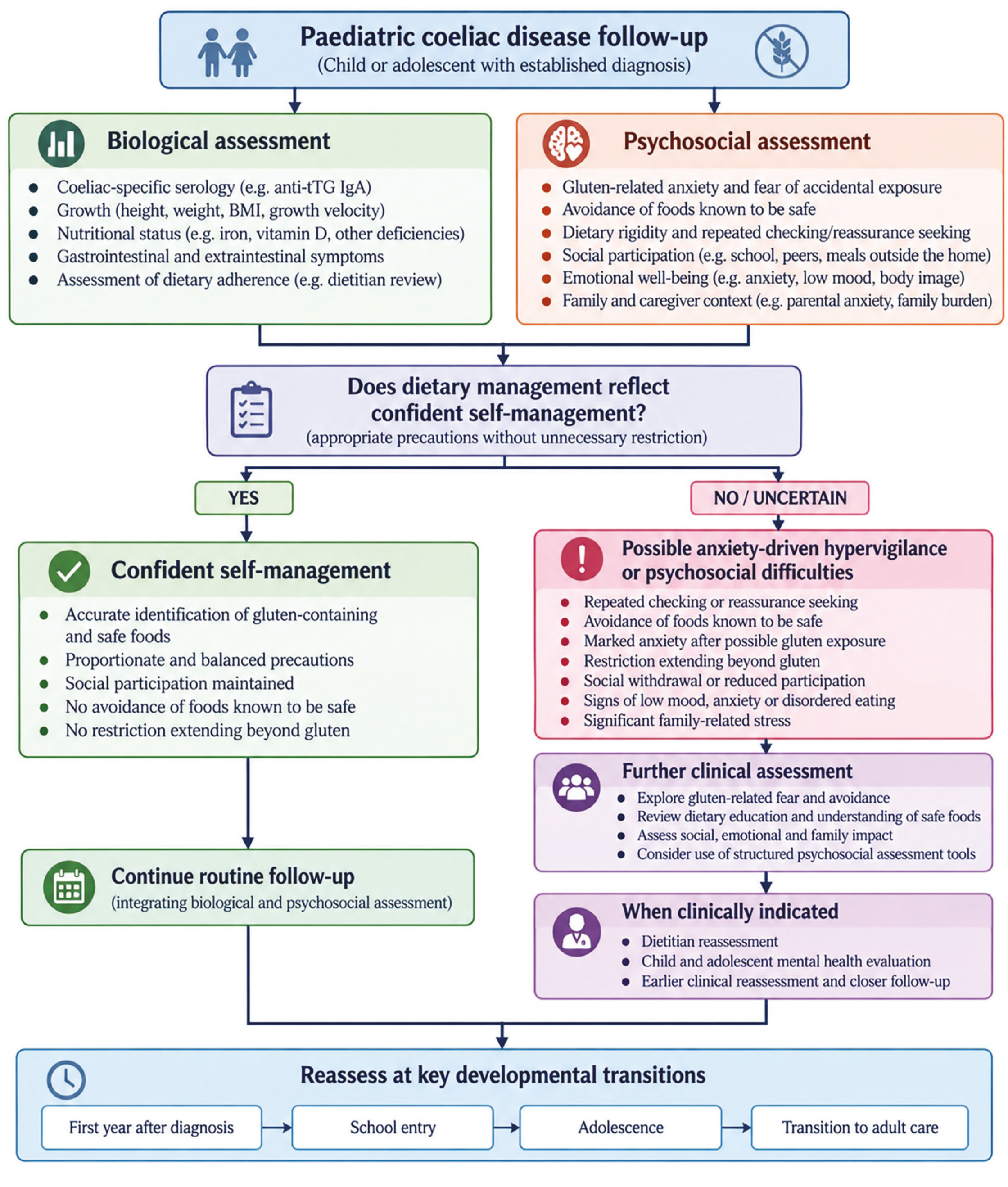
tTG-IgA: Tissue transglutaminase immunoglobulin A, BMI: Body mass index
Assessment may combine developmentally appropriate self-report with caregiver observations to obtain a broader picture of the child’s psychosocial functioning. Among adolescents, conducting part of the interview in private may facilitate discussions of dietary adherence, anxiety, and social experiences. The development and validation of a paediatric coeliac disease-specific quality-of-life instrument have broadened the available assessment options (). Although this instrument includes an Adaptive Vigilance domain, it was developed as a disease-specific quality-of-life measure rather than as a dedicated screening tool for distinguishing appropriate dietary caution from anxiety-driven hypervigilance (). Age-appropriate, validated Turkish-language self-report scales may also be used to screen for psychological symptoms (). These instruments should not be used to establish a diagnosis, but rather to identify children who may require more detailed evaluation.
In interviews in which a child’s gluten-related anxiety and restrictions in their social life cannot be assessed with a structured scale, the brief prompts listed in may be used. Responses to these questions may clarify how the diet affects the child’s social life and whether anxiety contributes to unnecessary avoidance. These questions are not validated screening instruments and should be used only as preliminary clinical prompts, not as a substitute for formal mental health assessment. Routine follow-up should integrate biological outcomes with assessment of the child’s psychosocial adaptation to the gluten-free diet. Satisfactory serological and growth outcomes do not distinguish confident dietary self-management from anxiety-driven hypervigilance. Marked anxiety, unnecessary avoidance of safe foods, repeated reassurance-seeking, social withdrawal, or restrictions extending beyond gluten should prompt further assessment. Psychosocial needs should be reassessed, particularly at key developmental transitions.
Children with marked anxiety, social withdrawal, or disordered eating behaviours should be referred to child and adolescent mental health services for further evaluation. Evidence from paediatric intervention studies remains limited. Adult studies of online cognitive-behavioural interventions provide preliminary supporting evidence but cannot be directly generalised to children (). Behavioural telehealth programmes are being developed for adolescents and caregivers (). Taken together with preliminary parent-focused research (), these findings suggest that anxiety and coping responses, in addition to dietary adherence, may be amenable to intervention. Key studies informing the biopsychosocial approach proposed in this review are summarised in , with paediatric evidence distinguished from supporting evidence derived from mixed-age or adult populations. Because qualitative findings suggest that incomplete or anxiety-provoking information provided at diagnosis may contribute to heightened vigilance, education should address not only the products to be avoided but also the foods that can be consumed safely (). Whenever possible, multidisciplinary follow-up should involve paediatric gastroenterology and dietetic support, with child and adolescent mental health services included when clinically indicated (, ). When multidisciplinary care is unavailable, the physician conducting follow-up may use the brief clinical prompts in to identify children who require more detailed psychosocial assessment.
Table 3. Summary of key evidence informing biopsychosocial follow-up in paediatric coeliac disease
Study | Population | Key finding | Implication for follow-up |
|---|---|---|---|
Mazzone et al. () | Children | Psychological distress may persist despite good adherence to a gluten-free diet | Satisfactory dietary adherence and biological outcomes do not exclude psychosocial difficulties |
Ho et al. () | Children and adolescents | Psychosocial effects involve emotional, social, and quality-of-life domains | Follow-up should extend beyond biological and dietary outcomes |
Wolf et al. () | Adolescents and adults | Hypervigilance was associated with greater dietary knowledge but poorer quality of life | Mixed-age supportive evidence that strict adherence does not necessarily indicate healthy adaptation |
Maddison-Roberts et al. () | Children | Dietary management may involve heightened threat perception and an increased need for control | Gluten-related anxiety and unnecessary vigilance should be explored during follow-up |
Butwicka et al. () | Children | Coeliac disease was associated with an increased risk of childhood psychiatric disorders | Psychological symptoms warrant attention during routine paediatric follow-up |
Daldaban Sarıca et al. () | Adolescents | Body image dissatisfaction, depression, and anxiety were higher than in healthy peers | Adolescence is an important period for psychosocial assessment |
Chellan et al. () | Children | Some children felt different from peers or experienced diet-related social exclusion | Social participation and perceived difference from peers should be assessed |
Pohoreski et al. () | Adolescents | Adolescents generally recognised gluten-containing foods but had difficulty identifying safe alternatives | Education should address foods that can be safely consumed as well as foods to avoid |
Cadenhead et al. () | Adolescents | Rigid and maladaptive dietary coping was associated with loneliness, physical complaints, and poorer quality of life | Dietary adherence should be assessed together with the emotional and behavioural pattern underlying it |
Aktaş and Ünlü Kaynakçı () | Adolescents | Discrimination, difficulty accessing gluten-free products, and limited social awareness were barriers to self-care | Social and environmental barriers should be reassessed during adolescence |
Germone et al. () | Children and caregivers | Coeliac disease affected family quality of life and was associated with persistent parental worry | Follow-up should include the family context and caregiver burden |
Satherley et al. () | Parents of children with coeliac disease | A parent-focused online psychological intervention showed preliminary feasibility | Family-related psychological factors may represent modifiable targets for intervention |
Coburn et al. () | Paediatric population | A paediatric coeliac disease-specific quality-of-life measure was developed and validated | Disease-specific tools may support structured psychosocial assessment |
Paediatric gastroenterology services remain central to the follow-up of childhood coeliac disease (). In health systems where children are seen regularly in primary care, these visits may also provide opportunities to identify psychosocial difficulties between specialist appointments (). Türkiye is an example of a setting in which family physicians maintain ongoing contact with the child and family, although this model is not necessarily transferable to all health-care systems. Where similar continuity exists, primary care may complement specialist follow-up by addressing parental anxiety, family functioning, dietary difficulties, and social participation (). Closer communication between primary and tertiary care could, therefore, support earlier recognition of diet-related anxiety or social isolation, but the value of such an approach is likely to depend on the organisation of the local health system.
Studies involving adult or mixed-age populations are explicitly identified and included only as supporting evidence where relevant; their findings should not be directly generalised to paediatric patients.
The evidence supporting these recommendations has important limitations. Because the majority of the literature is based on cross-sectional designs and data from tertiary centres, the direction of causality remains uncertain; the strength of the relationship between dietary adherence and psychological symptoms has likewise not been clarified (, ). Longitudinal cohorts followed from the moment of diagnosis are needed to clarify these relationships. Further validation of paediatric tools specifically designed to distinguish appropriate dietary vigilance from anxiety-driven hypervigilance is therefore needed. Multicentre studies could also help clarify the influence of socioeconomic differences ().
Conclusion
In childhood coeliac disease, treatment success has traditionally been assessed using a narrow set of biological outcomes, particularly coeliac-specific serology and growth. Consequently, paediatric coeliac follow-up should not focus solely on serological, growth, and nutritional outcomes; the psychosocial burden associated with maintaining a gluten-free diet should also be assessed.
In clinical assessment, it is important to explore whether dietary adherence reflects confident self-management, anxiety-driven restriction, or a combination of both. Follow-up goals should extend beyond preventing gluten exposure to include minimising the psychosocial disruption associated with lifelong dietary restrictions. Successful paediatric coeliac follow-up should therefore extend beyond normalised serology and appropriate growth to encompass the child’s ability to maintain a nutritionally adequate gluten-free diet without excessive anxiety, unnecessary restriction, or withdrawal from social life.
Footnotes
Ethics
Ethics Committee Approval: Not required.
Informed Consent: Not required.
Authorship Contributions
Concept: Ö.K., A.F., Design: Ö.K., A.F., Data Collection or Processing: Ö.K., Analysis or Interpretation: Ö.K., A.F., Literature Search: Ö.K., Writing: Ö.K., A.F.
Conflict of Interest: No conflict of interest was declared by the authors.
Financial Disclosure: The authors declared that this study received no financial support.
References
Mearin ML, Agardh D, Antunes H, et al. ESPGHAN position paper on management and follow-up of children and adolescents with celiac disease. J Pediatr Gastroenterol Nutr. 2022;75:369-386.
Cascobelo-Águeda L, Garrido-Bueno M, Rodríguez-García M, et al. The multidimensional impact of gluten-free diet adherence on quality of life in pediatric and adolescent celiac disease: a systematic review. Children (Basel). 2026;13:722.
Kerbage A, Jansson-Knodell C, Weekley K, Gardinier D, Rubio-Tapia A. High-quality nutritional and medical care in celiac disease follow-up. Nutrients. 2025;17:3530.
Rozensztrauch A, Mostyńska P. Quality of life in children with celiac disease: an observational study. Nutrients. 2025;17:1085.
Mazzone L, Reale L, Spina M, et al. Compliant gluten-free children with celiac disease: an evaluation of psychological distress. BMC Pediatr. 2011;11:6.
Ho WHJ, Atkinson EL, David AL. Examining the psychosocial well-being of children and adolescents with coeliac disease: a systematic review. J Pediatr Gastroenterol Nutr. 2023;76:e1-e14.
Wolf RL, Lebwohl B, Lee AR, et al. Hypervigilance to a gluten-free diet and decreased quality of life in teenagers and adults with celiac disease. Dig Dis Sci. 2018;63:1438-1448. Erratum in: Dig Dis Sci. 2018;63:1982-1983.
Maddison-Roberts H, Jones C, Satherley RM. Gluten-free diet management and well-being in children with celiac disease: a qualitative study. Pediatr Allergy Immunol. 2025;36:e70061.
Pop AV, Popa SL, Dumitrascu DL. Extra-digestive manifestations of celiac disease. Med Pharm Rep. 2024;97:249-254.
Singh P, Arora A, Strand TA, et al. Global prevalence of celiac disease: systematic review and meta-analysis. Clin Gastroenterol Hepatol. 2018;16:823-836.e2.
Dalgic B, Sari S, Basturk B, et al. Prevalence of celiac disease in healthy Turkish school children. Am J Gastroenterol. 2011;106:1512-7. Erratum in: Am J Gastroenterol. 2011;106:1565.
Iorfida D, Valitutti F, Vestri A, et al. Dietary compliance and quality of life in celiac disease: a long-term follow-up of primary school screening-detected patients. Front Pediatr. 2021;9:787938.
Webb C, Myléus A, Norström F, et al. High adherence to a gluten-free diet in adolescents with screening-detected celiac disease. J Pediatr Gastroenterol Nutr. 2015;60:54-9.
Moawad MH, Serag I, Shalaby MM, et al. Anxiety and depression among adults and children with celiac disease: a meta-analysis of different psychiatry scales. Psychiatr Res Clin Pract. 2024;6:124-33.
Butwicka A, Lichtenstein P, Frisén L, Almqvist C, Larsson H, Ludvigsson JF. Celiac disease is associated with childhood psychiatric disorders: a population-based study. J Pediatr. 2017;184:87-93.e1.
Daldaban Sarıca B, Demirci E, Altay D, Arslan D. Body image dissatisfaction, depression, and anxiety in adolescents with celiac disease. Front Pediatr. 2025;13:1603009.
Unalcin I, Ersoy S, Pala E, Engin VS. Quality of life and depressive state in patients with celiac disease: a case-control study. Arab J Gastroenterol. 2025;26:272-80.
Stojanović B, Medović R, Đonović N, et al. Assessment of quality of life and physical and mental health in children and adolescents with coeliac disease compared to their healthy peers. Srp Arh Celok Lek. 2019;147:301-306.
Chellan D, Muktesh G, Vaiphei K, et al. Effect of gluten-free diet and compliance on quality of life in pediatric celiac disease patients. JGH Open. 2019;3:388-393.
Mouslih A, El Rhazi K, Bahra N, Lakhdar Idrissi M, Hida M. Gluten-free diet compliance in children with celiac disease and its effect on clinical symptoms: a retrospective cohort study. Cureus. 2023;15:e50217.
Mehtab W, Agarwal S, Agarwal H, et al. Gluten-free foods are expensive and nutritionally imbalanced than their gluten-containing counterparts. Indian J Gastroenterol. 2024;43:668-678.
Martín-Masot R, Labella A, Baena-García L, et al. Time following a gluten-free diet, ultra-processed food consumption and quality of life in children with celiac disease. Appl Sci. 2022;12:11680.
Giuffrè M, Gazzin S, Zoratti C, et al. Celiac disease and neurological manifestations: from gluten to neuroinflammation. Int J Mol Sci. 2022;23:15564.
Luz VCC, Pereira SG. Celiac disease gut microbiome studies in the third millennium: reviewing the findings and gaps of available literature. Front Med Technol. 2024;6:1413637.
McInnes H, Klapan L, Moore U, Singh J, Whelan K. Limited availability and higher cost of gluten-free foods continue in the United Kingdom: a comparative follow-up over more than a decade. J Hum Nutr Diet. 2026;39:e70209.
Haj-Ahmad LM, Alqaisi A, Altamimi E. Assessing the impact of celiac disease on the quality of life in Jordan. Cureus. 2024;16:e74395.
Pohoreski K, Horwitz SL, Gidrewicz D. Gluten-free diet knowledge and adherence in adolescents with celiac disease: a cross-sectional study. JPGN Rep. 2023;4:e330.
Meyer S. Promoting effective self-management of the gluten-free diet: children’s and adolescents’ self-generated do’s and don’ts. Int J Environ Res Public Health. 2022;19:14051.
Cadenhead JW, Wolf RL, Lebwohl B, et al. Diminished quality of life among adolescents with coeliac disease using maladaptive eating behaviours to manage a gluten-free diet: a cross-sectional, mixed-methods study. J Hum Nutr Diet. 2019;32:311-320.
Rask CU, Duholm CS, Poulsen CM, Rimvall MK, Wright KD. Annual research review: health anxiety in children and adolescents-developmental aspects and cross-generational influences. J Child Psychol Psychiatry. 2024;65:413-430.
Wei Y, Wang Y, Yuan Y, Chen J. Celiac disease, gluten-free diet, and eating disorders: from bench to bedside. Foods. 2024;14:74.
Gercek HG, İpek Bas SA, Kara A, Bukulmez A. Examination of eating attitudes and symptoms of orthorexia nervosa in adolescents with and without celiac disease. J Eat Disord. 2025;13:102.
Lee AR, Zybert P, Chen Z, et al. Food avoidance beyond the gluten-free diet and the association with quality of life and eating attitudes and behaviors in adults with celiac disease. Nutrients. 2024;16:3411.
Aktaş EF, Ünlü Kaynakçı FZ. The adolescent celiac experience: a holistic perspective on self-care among the “invisible” segment of society. Disabil Rehabil. 2025;47:6103-6112.
Kivelä L, Eurén A, Repo M, Huhtala H, Kaukinen K, Kurppa K. Coexisting type 1 diabetes, persistent symptoms, and financial issues associate with poorer adherence to a gluten-free diet in celiac disease after transition from pediatrics to adult care. Front Nutr. 2022;9:883220.
Satherley RM, Coburn SS, Germone M. The impact of celiac disease on caregivers’ well-being: an integrative review. J Pediatr Gastroenterol Nutr. 2020;70:295-303.
Germone MM, Ariefdjohan M, Stahl M, et al. Family ties: the impact of celiac disease on children and caregivers. Qual Life Res. 2022;31:2107-2118.
Kutahyalioglu NS, Kaş Alay G. Lived experiences of parents of children with celiac disease: a descriptive qualitative study. Pediatr Gastroenterol Hepatol Nutr. 2024;27:146-157.
Satherley RM, Francios-Walcott R, Tallentire H, Velleman S, David AL, Jones CJ. Psychological intervention for parents of children with celiac disease: a pilot and feasibility randomized controlled trial. J Pediatr Gastroenterol Nutr. 2026;82:1062-1071.
Coburn S, Trojanowski PJ, Vagadori J, et al. Development and validation of a pediatric celiac disease-specific quality of life measure. Am J Gastroenterol. 2025;120:1116-1126.
Akçay E, Çevirici AD, Şenel M, et al. Psychometric properties of the Turkish version of the depression anxiety stress scale for youth (DASS-Y) in psychiatric and non-psychiatric samples. BMC Psychol. 2025;13:1305.
Sainsbury K, Mullan B, Sharpe L. A randomized controlled trial of an online intervention to improve gluten-free diet adherence in celiac disease. Am J Gastroenterol. 2013;108:811-817.
Vagadori J, Trojanowski PJ, Keenan C, et al. Behavioral telehealth intervention development for adolescents with celiac disease and their caregivers: the Gluten-Free Resilience and Overall Wellness (GROW) project. Nutr Health. 2026;32:869-885.
Supplementary Materials
Supplementary Table 1. Database-specific search strategies used for the narrative review
Download